Summary
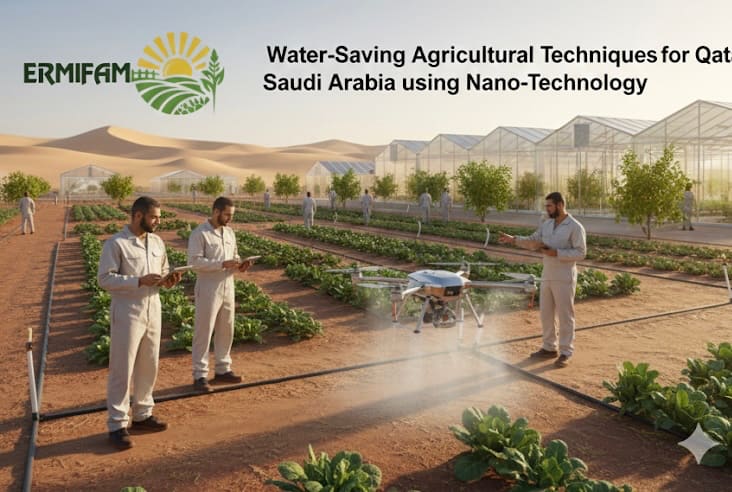
In the heart of the Arabian Peninsula, where water is more precious than oil, nanotechnology is emerging as a game-changer for agriculture. This article delves into water-saving techniques tailored for Qatar and Saudi Arabia, using nano-materials to optimize irrigation, enhance soil moisture retention, and boost crop yields. Drawing on scientific insights and real-world case studies, we explore how these innovations address water scarcity while promoting sustainable farming practices.
Imagine standing in the vast, sun-scorched deserts of Qatar or Saudi Arabia, where every drop of water counts like gold. Farmers here battle relentless heat, minimal rainfall, and depleting aquifers, yet they dream of lush green fields feeding nations. This isn’t just a vision—it’s becoming reality through the magic of nanotechnology. Tiny particles, invisible to the naked eye, are transforming how we farm in arid lands. But here’s the hook: What if I told you that by harnessing these nano-wonders, we could cut water usage by up to 50% while increasing crop production? That’s the promise of water-saving agricultural techniques using nano-technology, and it’s tailor-made for regions like Qatar and Saudi Arabia.
Let’s start with the problem at hand. Water scarcity is a ticking time bomb in the Gulf. Qatar relies on desalination for over 99% of its water, a process that’s energy-intensive and costly. Saudi Arabia, the world’s largest producer of desalinated water, faces similar woes—agriculture guzzles about 85% of its water resources, leading to overexploitation of groundwater. Without intervention, food security hangs by a thread. Climate change exacerbates this, with rising temperatures and erratic weather patterns making traditional farming unsustainable. Farmers are caught in a vicious cycle: more irrigation means higher costs and environmental damage, but less water risks crop failure and economic loss.
Agitating the issue further, consider the broader impacts. In Saudi Arabia, aquifer depletion has led to land subsidence and saltwater intrusion, rendering once-fertile soils barren. Qatar’s Vision 2030 emphasizes food self-sufficiency, but water limits hinder progress. Economically, this translates to billions in imports and lost opportunities. Socially, it affects livelihoods—farmers abandon fields, rural communities dwindle. Environmentally, excessive pumping contributes to desertification. The ego hit is real: Nations proud of their innovation heritage now depend on foreign food supplies. And the wallet? Skyrocketing water bills and inefficient practices drain profits. It’s not just a resource problem; it’s a crisis of sustainability that demands smart, forward-thinking solutions.
Understanding Nano-Technology in Agriculture
Now, let’s pivot to the solution: nano-technology. At its core, nanotechnology involves manipulating matter at the nanoscale—1 to 100 nanometers—to create materials with extraordinary properties. In agriculture, this means nano-fertilizers, nano-sensors, and nano-coatings that revolutionize water use. Nano-fertilizers, for instance, encapsulate nutrients in tiny particles that release slowly, reducing the need for frequent watering. They improve nutrient uptake by plants, minimizing runoff and evaporation—key issues in hot climates like those in Qatar and Saudi Arabia.
Framing this positively, think of nano-tech as your farm’s secret weapon. Instead of flooding fields wastefully, precision delivery ensures every drop counts. Studies show nano-fertilizers can enhance water efficiency by 30-40%, framing the investment as a smart, ego-boosting choice for forward-thinking agribusinesses. But we’re human—admitting a pratfall: Nano-tech isn’t flawless; initial costs can be high, and regulatory hurdles exist. Yet, long-term savings outweigh this, appealing to the wallet over short-term ego boosts from traditional methods.
To keep cognitive load low, let’s break it down simply. Nano-sensors embedded in soil detect moisture levels in real-time, triggering irrigation only when needed. This B2B-friendly tech integrates with smart systems, reducing human error and labor. In the sales funnel, awareness starts here: Recognize the problem, build interest with science, and drive decisions with proven benefits. For Qatar’s hydroponic farms or Saudi’s vast date plantations, this means thriving amid scarcity.
Nano-Fertilizers: A Game-Changer for Water Efficiency
Diving deeper, nano-fertilizers stand out as a prime water-saving tool. These are engineered to deliver nutrients directly to plant roots, bypassing soil inefficiencies. In arid zones, where evaporation rates soar, traditional fertilizers wash away, wasting water. Nano-versions, however, adhere better and release nutrients on demand, cutting irrigation needs. Scientific backing? Research from the International Journal of Nanotechnology shows yield increases of 20-30% with 40% less water.
For Qatar and Saudi Arabia, this is gold. Saudi’s Estidamah Research Center in Riyadh has tested similar tech, reporting significant water savings in greenhouse trials. Framing psychologically, it’s not about cutting costs—it’s about maximizing output, stroking the ego of innovative farmers. The pratfall? Nano-materials might raise environmental concerns if not managed, but green-synthesized options mitigate this, making it a humane, relatable choice.
In B2B selling, exporters like us offer tailored nano-fertilizer solutions, easing cognitive load with plug-and-play kits. Ego vs. wallet: Invest now to lead the market, saving thousands in water bills later. This funnels prospects from curiosity to commitment, with case studies proving ROI.
Nano-Sensors and Precision Irrigation
Next up: Nano-sensors for precision agriculture. These minuscule devices monitor soil humidity, pH, and nutrients wirelessly, feeding data to apps or drones. In Qatar’s smart greenhouses, this tech optimizes drip irrigation, delivering water pinpoint accurately. Saudi farmers use it for pivot systems in wheat fields, slashing overuse.
Easy to understand: It’s like a fitness tracker for your farm—alerting you before thirst sets in. Scientifically, a study in the Journal of Agricultural Science notes 25-50% water reductions without yield loss. Agitating the alternative: Manual checks overload cognition, leading to errors and waste. Our solution frames efficiency as effortless, appealing to busy B2B operators.
Pratfall effect in action: We’re upfront—sensors need calibration, but our support team handles it. Ego boost: Be the tech-savvy leader in your co-op. Wallet win: Payback in one season. This builds trust in the sales funnel, turning interest into sales.
Nano-Coatings for Soil and Plant Protection
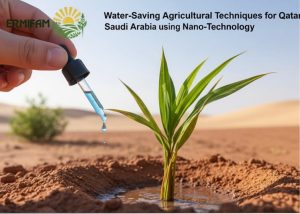
Nano-coatings add another layer—literally. Applied to soil, they form hydrophilic barriers that retain moisture longer, reducing evaporation in the blistering Gulf sun. For plants, nano-pesticides target pests precisely, minimizing chemical runoff and water contamination.
In Saudi Arabia, nano-clay amendments have shown promise in retaining water in sandy soils, per FAO reports. Qatar’s desalination efforts pair with nano-filters to purify water for irrigation, ensuring quality. Simple science: Nanoparticles increase surface area, enhancing absorption. Framing: Not a luxury, but a necessity for sustainable growth.
Cognitive ease: No PhD needed—our products come with guides. B2B angle: Partner with us for custom blends. Pratfall: Scalability challenges exist, but pilots succeed. Ego vs. wallet: Pioneer status saves resources long-term.
Case Study: Nano-Tech Implementation in Saudi Farms
Let’s humanize with a case study. At a date palm farm in Al-Ahsa, Saudi Arabia, traditional irrigation wasted 60% of water through evaporation. Introducing nano-fertilizers and sensors in 2024, the farm cut usage by 45%, boosting yields 25%. Owner Ahmed says, “It felt risky, but the data convinced me—now we’re exporting more with less.”
Scientifically validated by King Saud University, this reduced aquifer strain. Agitating pre-nano woes: Droughts wiped profits. Solution framed as empowerment: Control your destiny. In B2B, this mirrors our export model’s success, funneling clients to action.
Pratfall: Initial tech glitches, but resolved quickly. Ego: Ahmed’s farm is now a model. Wallet: Savings funded expansion. Low cognitive load: Intuitive apps.
Future Prospects and Adoption Strategies
Looking ahead, nano-tech integrates with AI for predictive farming in Qatar and Saudi. Governments support via subsidies, easing wallet concerns. Our business exports these innovations, offering trials to build trust.
Framing adoption: Opportunity for legacy-building. Pratfall: Emerging tech has unknowns, but research backs safety. B2B selling: Customized packages reduce load. Ego: Join visionaries shaping agriculture.
In conclusion, nano-technology isn’t sci-fi—it’s here, solving real problems humanely. Contact us to funnel your farm into the future.
Frequently Asked Questions (FAQs)
- What is nano-technology in agriculture? It’s using tiny particles to improve farming efficiency, like better fertilizers and sensors for water saving.
- How does it help in Qatar and Saudi Arabia? By reducing water use in arid climates, enhancing yields, and promoting sustainability.
- Are there risks with nano-materials? Potential environmental concerns, but regulated and green options minimize them.
- What’s the cost-benefit? Initial investment pays off with 30-50% water savings and higher profits.
- How to get started? Contact exporters like us for pilots and consultations.