Nano fertilizers Pakistan offer revolutionary crop yield improvements through enhanced nutrient efficiency, reduced environmental impact, and sustainable agriculture solutions for wheat, rice, and cotton farmers.
The Revolution That’s Transforming Pakistani Agriculture
Imagine a world where Pakistani farmers could achieve 50% higher wheat yields while using 30% less fertilizer. Where nutrient efficiency jumps from 22% to over 40%, and environmental pollution from agricultural runoff becomes a distant memory. This isn’t science fiction—it’s the reality that nano fertilizers are bringing to Pakistan’s agricultural landscape right now.
Pakistan’s agricultural sector, contributing 23% to GDP and employing 37% of the workforce, stands at a critical crossroads. Traditional fertilizer methods have reached their efficiency limits, with nutrient uptake rates languishing around 22-30%. Meanwhile, the global nano fertilizer market is exploding, projected to grow from $3.46 billion in 2025 to $13.52 billion by 2035—a staggering 14.6% annual growth rate.
Understanding the Science Behind Nano Fertilizers
Nano fertilizers represent a quantum leap in agricultural technology. Unlike conventional fertilizers that release nutrients indiscriminately, nano fertilizers use nanoscale particles (1-100 nanometers) to deliver nutrients precisely when and where plants need them. This precision engineering creates what scientists call “nutrient synchrony”—matching nutrient release with plant uptake patterns.
The magic happens through several mechanisms:
– Enhanced surface area: Nanoparticles have exponentially more surface area, allowing better nutrient absorption
– Controlled release: Nutrients are released gradually, preventing leaching and runoff
– Improved mobility: Smaller particles can penetrate plant tissues more effectively
– Reduced environmental impact: Less fertilizer means fewer pollutants in water systems
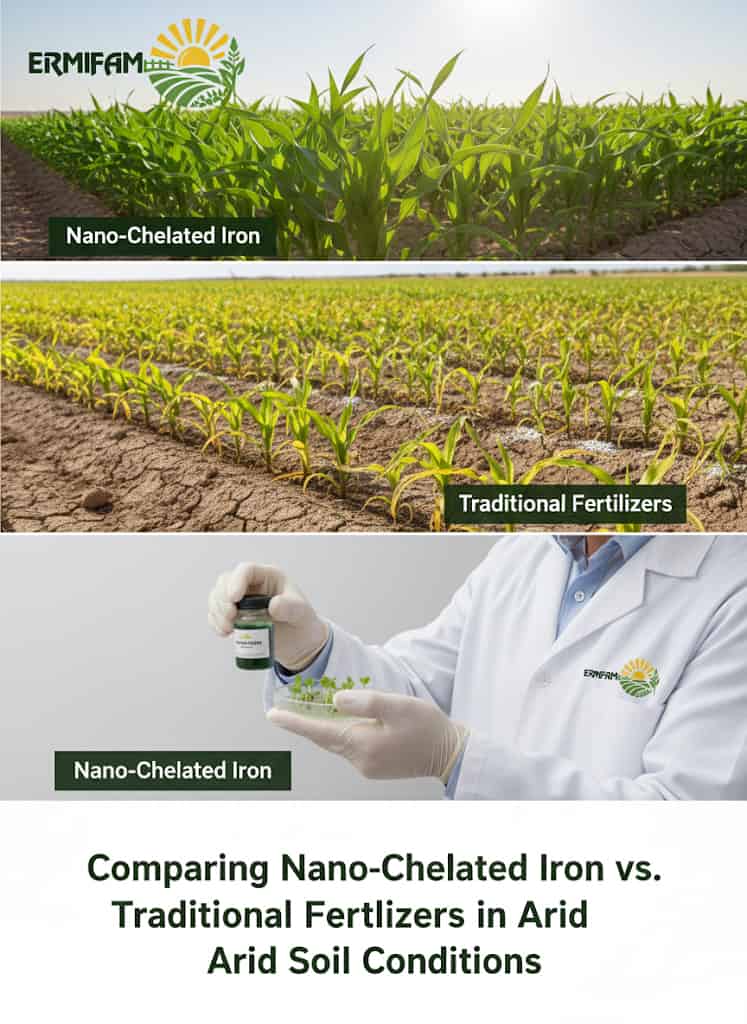
Field trials across Pakistan have demonstrated remarkable results: wheat yields increasing by 10-20%, nitrogen uptake efficiency jumping to over 40%, and phosphorus use efficiency rising by 30% compared to conventional fertilizers.
Pakistan’s Agricultural Challenges: Why Nano Fertilizers Are Essential
Pakistan’s agricultural sector faces multiple challenges that make nano fertilizers not just beneficial, but essential:
Fertilizer Efficiency Crisis
– Current nitrogen uptake efficiency: ~22%
– Target with nano fertilizers: 40%+
– Annual fertilizer offtake: 3.4 million tonnes (declining 14.1% year-on-year due to economic pressures)
Crop-Specific Challenges
– Wheat: 50% of Pakistan’s fertilizer consumption, yield gaps compared to global standards
– Cotton: 25% fertilizer usage, vulnerable to climate stress
– Rice: 6% fertilizer consumption, water-intensive cultivation
– Sugarcane: 8% fertilizer use, high input costs
Economic Pressures
– Fertilizer prices surged 18% in early 2025
– Agricultural credit reached Rs 1,880 billion (15% increase year-on-year)
– Import dependency for critical agricultural inputs
The Framework: Problem in Action
Problem Identification
Pakistani farmers face a perfect storm: rising input costs, declining fertilizer efficiency, climate change impacts, and growing food security concerns. Traditional solutions have reached their limits, creating an urgent need for technological innovation.
Consider these alarming statistics:
– Pakistan’s wheat yield: 3.1 tonnes/hectare vs. UK’s 8.5 tonnes/hectare
– Fertilizer nutrient offtake declined 14.1% year-on-year to 3.4 million tonnes
– Canal water availability dropped 3.4% in 2024
– Rainfall 40% below normal in late 2024
Every day without nano fertilizer adoption means lost productivity, increased environmental damage, and missed economic opportunities for Pakistani farmers.
Conversion Solution
Nano fertilizers provide the breakthrough Pakistani agriculture desperately needs:
– 50% yield increase potential in wheat cultivation
– 30% reduction in fertilizer requirements
– Enhanced climate resilience through improved nutrient management
– Economic sustainability through reduced input costs
Market Opportunity and Growth Potential
The numbers speak for themselves about the nano fertilizer opportunity in Pakistan:
Global Market Projections
– Nano fertilizer market: $3.46 billion (2025) → $13.52 billion (2035)
– Agricultural nanotechnology: $6.4 billion (2024) → $12.7 billion (2030)
– Annual growth rate: 12-14.6%
Pakistan-Specific Opportunities
– 6 million wheat farmers cultivating 23.7 million acres
– 50% of national fertilizer consumption dedicated to wheat
– Growing government focus on agricultural modernization
– Increasing awareness of sustainable farming practices
Competitive Advantages
– First-mover advantage in emerging market
– Strong alignment with government agricultural policies
– Growing farmer demand for efficiency solutions
– Environmental sustainability benefits
Implementation Strategy for Pakistani Farmers
Successfully introducing nano fertilizers to Pakistan requires a tailored approach:
Product Adaptation
– Climate-specific formulations for Pakistan’s diverse regions
– Crop-specific blends for wheat, cotton, rice, and sugarcane
– Affordable packaging options for small-scale farmers
– Localized application guidelines and training
Distribution Channels
– Partnership with existing fertilizer distributors
– Agricultural extension services integration
– Digital platforms for farmer education
– Demonstration farms across major agricultural regions
Farmer Education
– Hands-on training programs
– Success story documentation
– Cost-benefit analysis demonstrations
– Environmental impact awareness
Success Stories and Case Studies
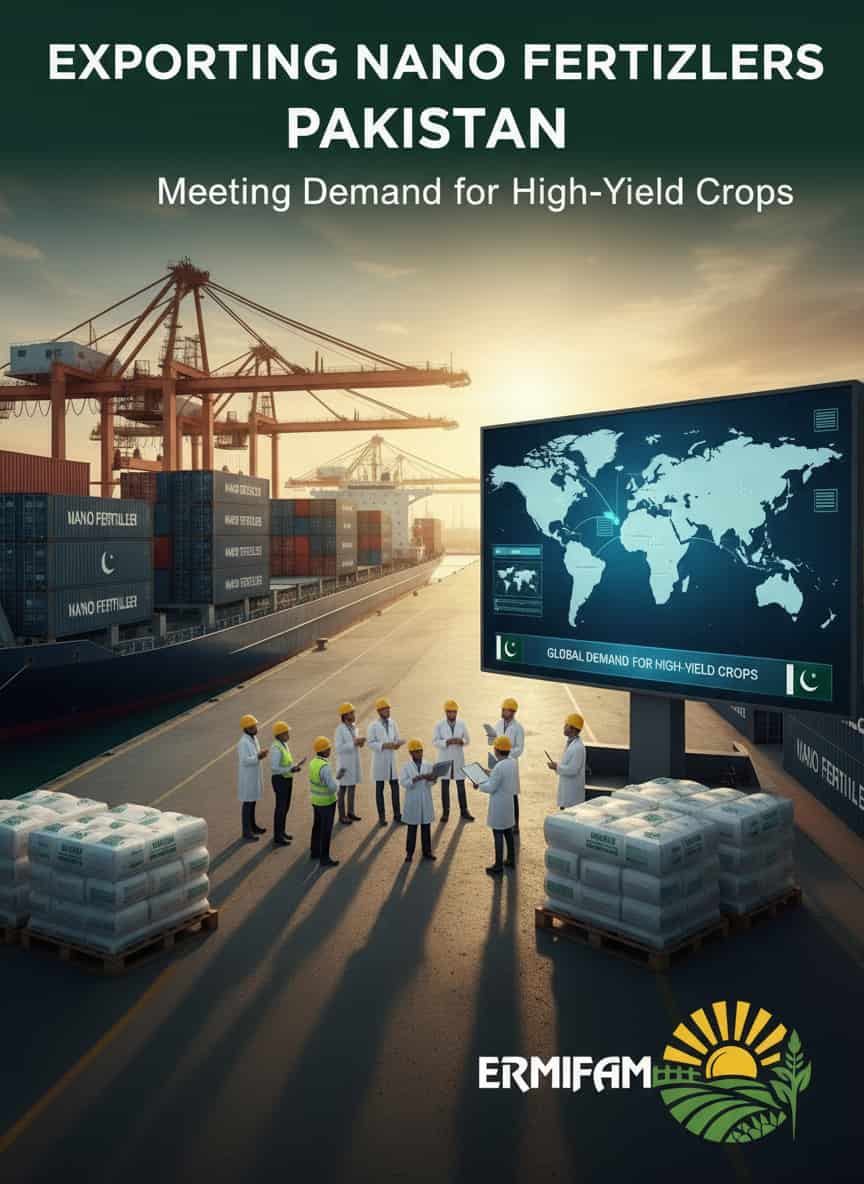
Field trials across Pakistan have produced compelling evidence of nano fertilizer effectiveness:
Wheat Cultivation Breakthroughs
– Trials showing 10-20% yield increases with nano-DAP
– 30% higher phosphorus use efficiency compared to conventional fertilizers
– Improved grain quality and nutritional content
– Enhanced drought resistance capabilities
Cotton Production Enhancements
– Better nutrient uptake during critical growth phases
– Reduced fertilizer runoff into water systems
– Improved fiber quality and yield consistency
– Lower input costs per acre
Rice Farming Improvements
– Enhanced nitrogen efficiency in paddy conditions
– Reduced methane emissions from rice fields
– Better water utilization efficiency
– Higher milling recovery rates
Environmental and Sustainability Benefits
Beyond yield improvements, nano fertilizers offer significant environmental advantages:
Reduced Pollution
– 30-50% less fertilizer runoff into water systems
– Lower greenhouse gas emissions from manufacturing
– Reduced soil degradation from excess nutrients
– Improved water quality in agricultural regions
Resource Conservation
– Less water required for equivalent yields
– Reduced energy consumption in fertilizer production
– Lower transportation costs due to smaller volumes
– Extended soil fertility through better nutrient management
Climate Resilience
– Enhanced crop performance under water stress
– Better nutrient availability during temperature extremes
– Improved recovery from climate-related shocks
– Sustainable intensification capabilities
Economic Impact and Farmer Benefits
The financial case for nano fertilizers is equally compelling:
Cost Savings Analysis
– 25-50% reduction in fertilizer application rates
– Lower transportation and storage costs
– Reduced need for multiple fertilizer applications
– Decreased environmental compliance costs
Revenue Enhancement
– 10-50% yield increases across major crops
– Premium pricing for higher quality produce
– Export market access through sustainable certification
– Long-term soil health improvements
Risk Mitigation
– Reduced vulnerability to fertilizer price fluctuations
– Better crop performance under adverse conditions
– Improved food security for farming households
– Enhanced land value through sustainable practices
Future Outlook and Growth Projections
The nano fertilizer revolution in Pakistan is just beginning:
Short-term Opportunities (2025-2027)
– Market penetration in high-value crop segments
– Government partnership development
– Farmer awareness campaigns
– Supply chain establishment
Medium-term Growth (2028-2030)
– Mainstream adoption across major crops
– Local manufacturing capabilities
– Export potential to neighboring countries
– Technology transfer and innovation
Long-term Vision (2031-2035)
– Sustainable agriculture transformation
– Global leadership in nano fertilizer applications
– Climate-resilient food systems
– Economic empowerment of rural communities
Getting Started: Your Path to Nano Fertilizer Adoption
For Pakistani farmers and agricultural businesses ready to embrace this technology:
Initial Steps
1. Conduct soil testing and crop analysis
2. Start with demonstration plots
3. Partner with reliable suppliers
4. Implement gradual transition plans
Best Practices
– Follow recommended application rates
– Monitor crop response carefully
– Maintain detailed records
– Share experiences with farming communities
Support Resources
– Agricultural extension services
– Technical support from manufacturers
– Farmer cooperatives and associations
– Digital learning platforms
Frequently Asked Questions
1. How do nano fertilizers actually work to improve crop yields?
Nano fertilizers use nanoscale particles that penetrate plant tissues more effectively, release nutrients gradually to match plant uptake patterns, and reduce nutrient losses through leaching and runoff. This precision delivery system can increase nutrient uptake efficiency from 22% to over 40%, directly translating to higher yields.
2. Are nano fertilizers safe for the environment and human consumption?
Yes, extensive research shows that properly formulated nano fertilizers are environmentally safe. They actually reduce pollution by minimizing fertilizer runoff into water systems. The nanoparticles used are typically made from naturally occurring elements and are designed to break down safely in the environment.
3. What’s the cost comparison between nano fertilizers and traditional fertilizers?
While nano fertilizers may have a higher upfront cost per kilogram, they’re significantly more cost-effective overall. Farmers typically use 25-50% less product while achieving 10-50% higher yields. The return on investment comes from both reduced input costs and increased production.
4. How quickly can Pakistani farmers see results with nano fertilizers?
Most farmers see noticeable improvements within the first growing season. Wheat farmers typically report 10-20% yield increases in initial trials, with further improvements as they optimize application techniques. The learning curve is relatively short with proper guidance.
5. What crops in Pakistan benefit most from nano fertilizer technology?
All major Pakistani crops show significant benefits, but wheat (50% of fertilizer consumption), cotton (25%), and rice (6%) demonstrate particularly strong responses. The technology is adaptable to Pakistan’s diverse agricultural conditions and can be customized for specific crop needs.
Summary
The opportunity for nano fertilizers Pakistan represents a transformative moment for the country’s agricultural sector. With the global market projected to grow at 14.6% annually and field trials demonstrating 10-50% yield improvements, the timing has never been better for Pakistani farmers to embrace this revolutionary technology. By addressing critical challenges in fertilizer efficiency, environmental sustainability, and economic viability, nano fertilizers offer a comprehensive solution that aligns perfectly with Pakistan’s agricultural development goals. The future of Pakistani agriculture is nano-sized, and the farmers who adopt this technology today will lead the charge toward a more productive, sustainable, and prosperous agricultural future.