What if your water plant never needed another diesel delivery?
Picture a pump station on a hot July afternoon in southern Iraq. The generator is running, the fuel gauge is dropping, and the truck that was due yesterday has not arrived. When the engine stops, the water stops: irrigation, process water, or the supply to a village.
Now picture the same site with the sun doing the work. The hours when the plant needs the most power are the hours when sunshine is strongest.
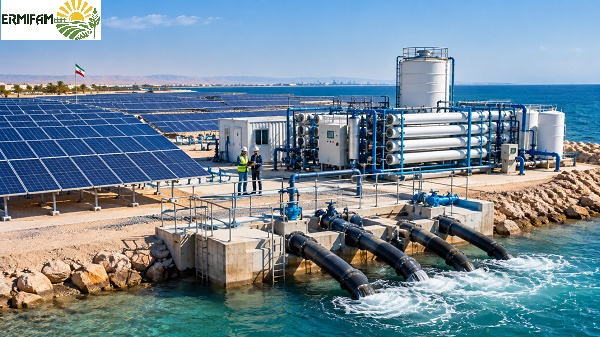
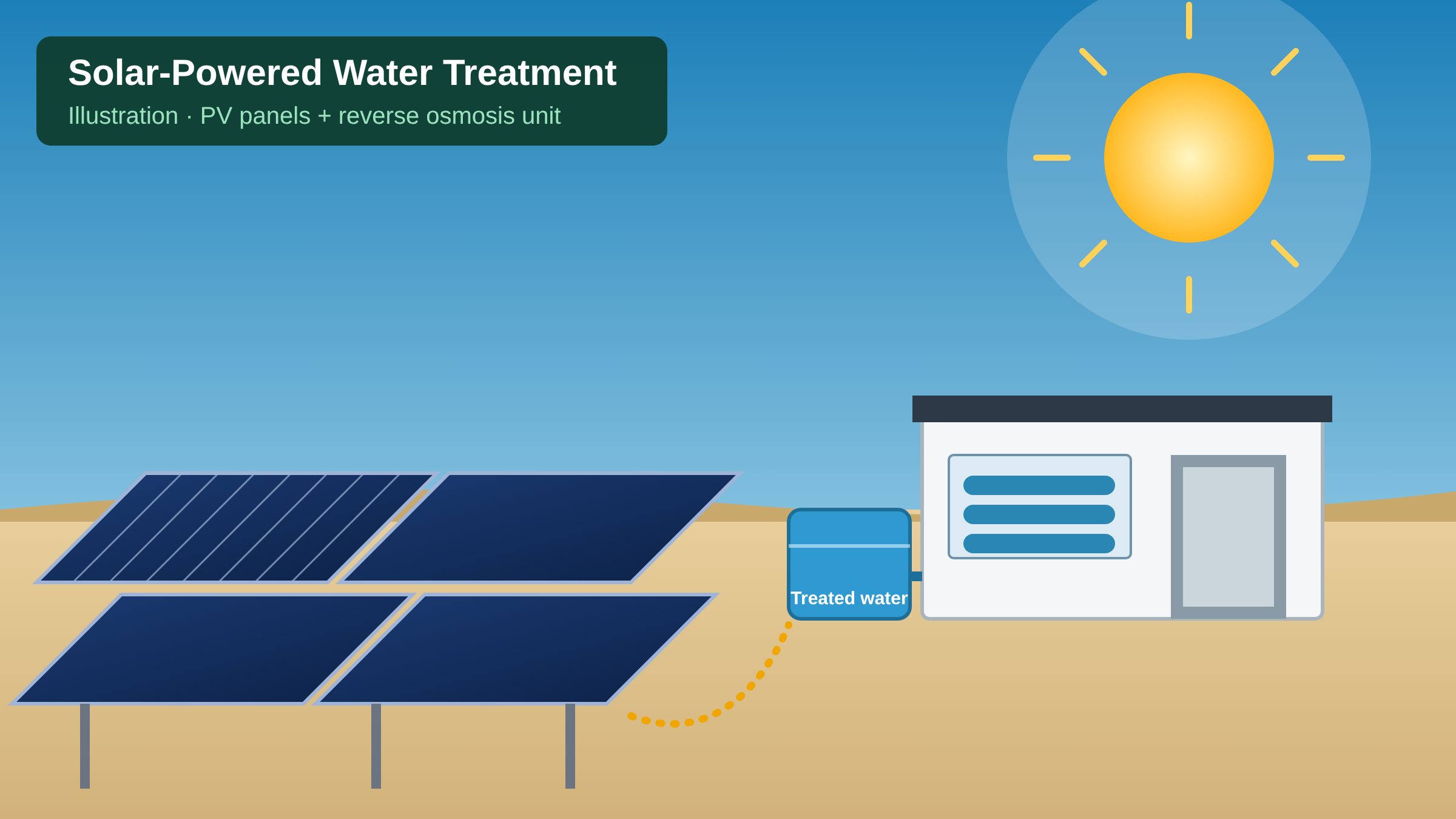
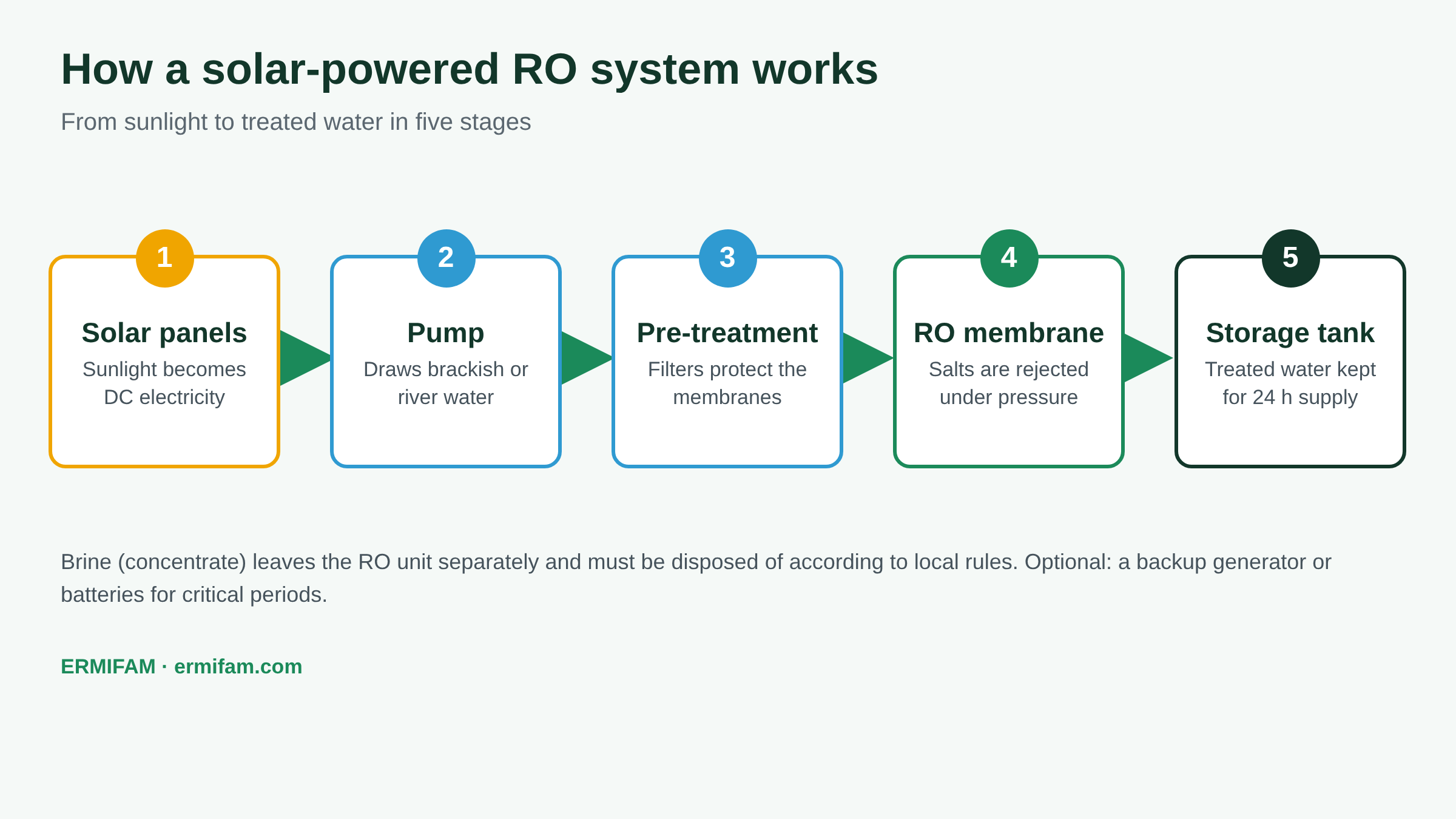
Short answer: A solar-powered water treatment system uses photovoltaic (PV) panels to run the pumps and reverse osmosis (RO) membranes that turn saline or contaminated water into usable water. For Iraq, it fits best where water is brackish, the grid is unreliable, and diesel logistics are a recurring cost and risk. This guide explains how to judge whether it fits your site, what to compare, and what to ask before you buy.
The situation: scarce water, hot summers, uncertain power
Iraq depends heavily on two rivers. According to a commentary in Arab News, about 98 percent of the country’s surface water comes from the Tigris and Euphrates, and flow from upstream has fallen sharply, with the water ministry forecasting that the rivers could dry up by 2040 if current trends continue.
The World Bank has warned that Iraq’s water resources could drop by 20 percent by 2050, and that nearly one-third of irrigated land could be left without water. It also reported that salinity affects about 60 percent of cultivated land and cuts yields by 30 to 60 percent on affected fields.
For an operations manager, this turns into three practical facts:
- Water quality is getting worse, especially in the south, where saltwater intrusion has been reported.
- Heat is extreme. Temperatures above 50 °C were recorded in 2020, which stresses equipment and people.
- Sun is abundant. Researchers estimate Iraq’s global solar radiation at roughly 2,000 to 2,500 kWh per square metre per year (Al-Kayiem and Mohammad, 2019).
That last point is the reason this topic is worth your attention. The resource you lack (clean water) can be produced with the resource you have in excess (sunshine), if the system is sized and specified correctly.
The problem: diesel dependence and salty water
Many sites that need treated water are far from a dependable grid. The usual answer is a diesel generator. It works, but it creates a chain of problems.
| Problem | Typical cause | What the operator experiences |
|---|---|---|
| Supply interruptions | Late fuel deliveries, generator faults | Water stops until fuel or repairs arrive |
| Unpredictable running cost | Fuel price changes, transport to remote sites | Budgets that cannot be fixed in advance |
| Maintenance load | Engine servicing, spare parts | Staff time and downtime |
| Poor raw water quality | Salinity, minerals, contamination | Scaling, crop damage, equipment wear, health concerns |
| Noise and emissions | Combustion engines | Complaints, compliance questions |
Salinity is its own problem. Water with too many dissolved salts damages crops, scales pipes and boilers, and may be unfit for drinking or food processing. Treatment is not optional on those sites; the only choice is how to power it.
The implication: what this costs you when it goes wrong
It is easy to treat water supply as a utility line item. It rarely is. When treated water is unavailable or unreliable, the cost shows up elsewhere:
- Lost output. A farm with saline irrigation water loses yield. The World Bank figure above (30 to 60 percent reduction on salinity-affected land) shows how large that effect can be.
- Stopped production. A factory that needs consistent process water cannot run when the plant is down.
- Contract risk. An EPC contractor delivering a project in a remote area carries penalty exposure if site water or power fails.
- Health and reputation risk. For community or workforce supply, poor water quality becomes a safety issue.
We deliberately do not quote a single “cost of downtime” number here. It depends on your operation, and a made-up figure would not help you decide. A better exercise: write down what one day without treated water costs your site, then compare that against the options below.
The need-payoff: how solar-powered treatment changes the equation
A solar water treatment system replaces most of the generator’s work with PV power. Fuel use drops, running costs become more predictable, and the system can operate without a grid connection. The payoff is not “free water”. It is fewer fuel deliveries, fewer interruptions and a clearer cost structure, in exchange for a higher upfront investment.
The four main options compared
| Option | Best for | Energy profile | Main limits |
|---|---|---|---|
| PV-powered brackish-water RO | Wells and canals with moderate salinity; farms, factories, villages | Lower energy per cubic metre than seawater RO | Needs pre-treatment; membranes need care and cleaning |
| PV-powered seawater RO | Coastal sites with very high salinity | Much higher energy demand (see below) | Larger PV array, higher cost, more complex plant |
| Solar distillation | Very small, remote supply | Uses solar heat directly | Low output per unit area; rarely suits industrial volumes |
| Filtration and UV disinfection | Water that is fresh but microbiologically unsafe | Very low energy | Does not remove dissolved salts |
For most Iraqi agricultural and industrial sites with brackish groundwater or river water, PV-powered brackish-water RO is the natural starting point.
Why the salinity level matters so much
Energy use rises quickly with salt content. One equipment manufacturer’s technical guide states that brackish-water treatment typically needs about 1 to 2 kWh per cubic metre, while seawater systems need roughly three to five times more (Elemental Water Makers, 2026). This is a vendor source, so treat the numbers as indicative and ask any supplier to confirm the specific energy use of the system they quote.
The practical conclusion: get a full water analysis before choosing a technology. Total dissolved solids (TDS), hardness, silica, iron and microbiological quality all affect which system works and how much it costs to run.
Not sure which option fits your site?
Send us your water analysis (or tell us the source and location) and the daily volume you need. We will help you shortlist suitable systems and compare quotations.
Request a feasibility assessment
Or contact us directly: +98 912 121 6801 · info@ermifam.com
Solar or diesel: how to compare the real cost
Published, project-specific cost data for Iraq is scarce, and prices change with equipment, site conditions and logistics. So instead of quoting generic numbers, here is the structure to use when comparing quotations. Ask every supplier to fill in the same table.
| Cost element | Diesel-powered plant | Solar-powered plant |
|---|---|---|
| Upfront equipment | Generator, RO unit, tanks | PV array, mounting, inverter or controller, RO unit, tanks, optional batteries |
| Installation and civil works | Generator pad, fuel storage | Array foundations, cabling |
| Fuel | Continuous, price-dependent, transport included | None for the PV portion; backup generator only if specified |
| Maintenance | Engine servicing, filters, parts | Panel cleaning (dust), inverter checks, membrane cleaning |
| Replacement | Engine overhaul | Membranes; inverter or batteries over time |
| Downtime risk | Fuel supply and engine faults | Weather and storage design |
Calculate total cost of ownership over the system’s life (for example 10 years), not just the purchase price. Solar usually costs more on day one and less to run. Whether it wins on your site depends on your fuel price, delivery distance and operating hours, which is why the comparison must use your own numbers.
A note on charts: we chose not to publish a cost chart in this guide because we could not source reliable, Iraq-specific figures. We would rather give you a framework than a number we cannot back up.
How to size the system
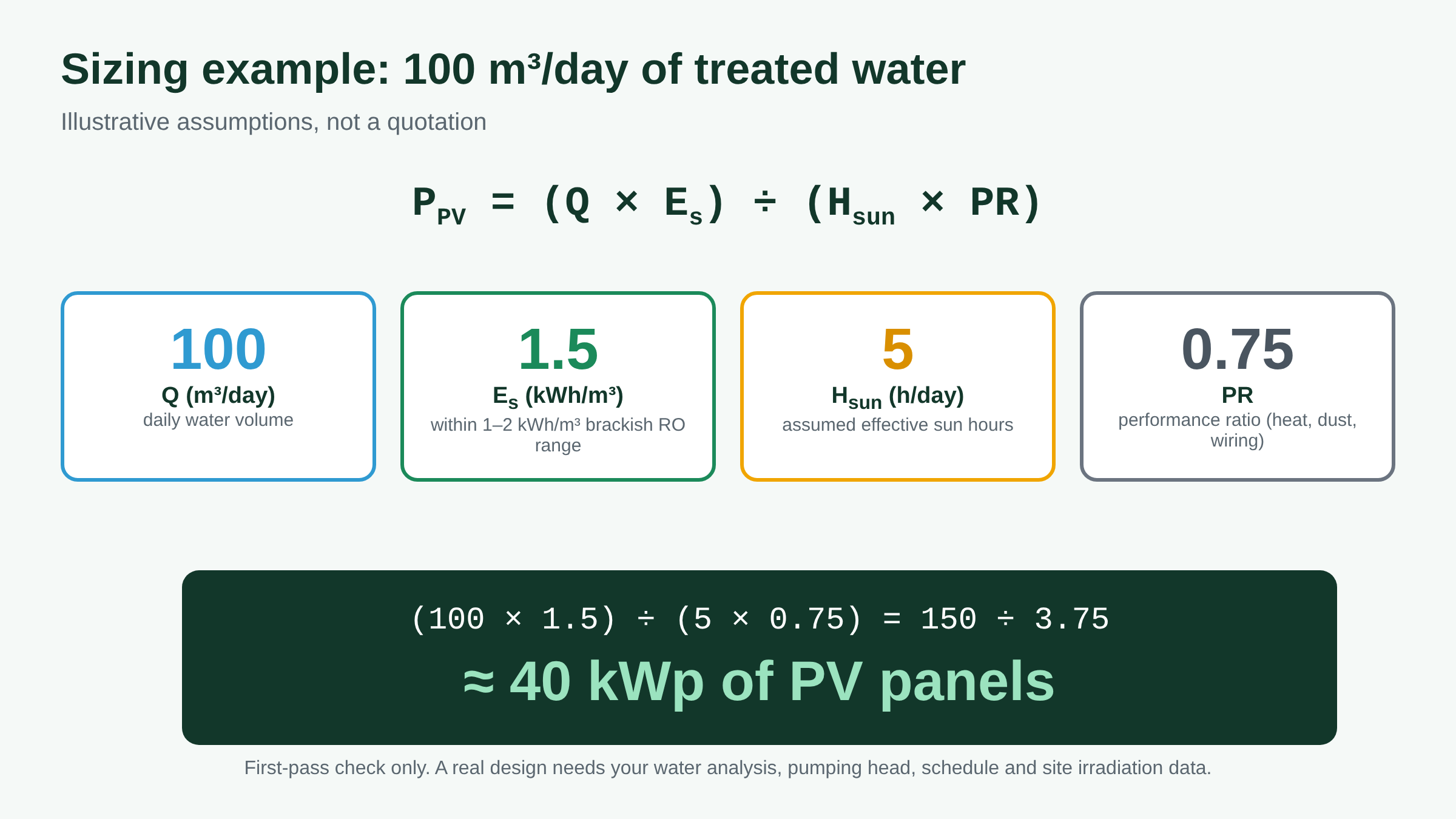
The core question is: how many kilowatts of solar panels do you need for a given daily water volume? A simple planning formula is:
PPV = (Q × Es) ÷ (Hsun × PR)
- Q: daily water volume you need (m³/day)
- Es: specific energy of the treatment system (kWh per m³)
- Hsun: effective full-sun hours per day at your site
- PR: performance ratio, which accounts for losses such as heat, dust and wiring (typically a number below 1)
Illustrative example (assumed values, not a quote): a site needs 100 m³ per day. Assume a brackish-water system using 1.5 kWh/m³ (within the 1 to 2 kWh/m³ range cited above), 5 effective sun hours and a PR of 0.75.
PPV = (100 × 1.5) ÷ (5 × 0.75) = 150 ÷ 3.75 = 40 kWp
So roughly 40 kWp of panels, before allowing for pumping from deep wells, pre-treatment, storage and safety margin. A real design must use your measured water analysis, pumping head, operating schedule and local irradiation data. Treat this as a first-pass check, not a final specification.
Two design choices matter a lot:
- Batteries or water storage? Storing treated water in tanks is usually simpler and cheaper than storing electricity. Many designs run the plant in daylight and store the water.
- Backup generator? A hybrid design keeps a small generator for critical periods. This lowers risk but does not remove fuel logistics entirely.
A 10-point checklist before you buy
- Full water analysis (TDS, hardness, silica, iron, microbiology), done by a competent laboratory.
- Daily and peak volume you actually need, today and in two to three years.
- Specific energy (kWh/m³) guaranteed in writing at your water quality.
- PV array size, panel and inverter brands, and the performance ratio assumed.
- Pre-treatment design: this decides how long membranes last.
- Membrane brand, expected life and cleaning plan.
- Storage strategy: tank volume versus batteries.
- Heat and dust protection for electronics and panels (cleaning schedule included).
- Warranty, spare parts and local service: who can be on site, and how fast?
- Commissioning and training: acceptance tests and operator training included in the offer.
Importing a system into Iraq: what to prepare
Procedures differ by project, port and customer, so confirm requirements with your customs broker and the relevant Iraqi authorities before you order. In general, plan for these steps:
- Confirm the technical specification and product codes with your supplier.
- Agree the delivery terms (Incoterms) and who handles transport and insurance.
- Prepare the commercial invoice, packing list and certificate of origin, and ask your broker which other certificates or approvals apply to your equipment.
- Clear customs through a licensed broker and plan inland transport to the site.
- Schedule installation, commissioning and training once the equipment arrives.
Build time for this into your project schedule. Delays at this stage are common and are easier to manage when planned early.
How ERMIFAM can help
ERMIFAM works as a sales and consulting partner for green-technology and trade projects in the region. For solar water treatment, that means helping you define requirements, shortlist suitable systems, and compare quotations on a like-for-like basis, so the decision rests on your own site data rather than on a brochure.
Video (30 to 45 seconds): how a solar-powered water treatment system works.
Frequently asked questions
How much does a solar-powered water treatment plant cost?
It depends on capacity, water quality, pre-treatment, storage and site conditions, so there is no honest single figure. Ask suppliers for an itemised quotation covering PV array, RO unit, pre-treatment, tanks, installation and training, then compare total cost of ownership over the system’s life.
Can solar power run reverse osmosis all day without a generator?
Solar runs the plant during daylight. To supply water around the clock without a generator, most designs store treated water in tanks, and some add batteries. Fully generator-free operation is possible but needs careful sizing of the array and storage.
Which suits Iraq better: brackish-water RO or solar distillation?
For farm, factory and community volumes, brackish-water RO is usually more practical because it produces more water per unit of energy and area. Solar distillation suits very small, remote supplies. A water analysis should confirm the choice.
What plant capacity fits a farm, a factory or a village?
It follows your daily demand. Start by measuring or estimating the cubic metres per day you need, add growth, then use the sizing formula above for a first estimate. A supplier should refine it with your water analysis and pumping details.
How long do RO membranes last and what maintenance is needed?
Life depends mainly on feed-water quality and pre-treatment. Plan for regular cleaning, filter changes and monitoring of pressure and output. Ask suppliers for the expected membrane life at your water quality, in writing.
What is the payback period compared with diesel?
It varies with your fuel price, delivery distance and operating hours. Calculate it with your own numbers: upfront cost difference divided by annual savings in fuel and maintenance. We do not quote a generic payback because it could mislead you.
What does importing a system into Iraq involve?
Typically a technical specification, commercial documents, customs clearance through a licensed broker, inland transport and commissioning. Requirements vary, so confirm them with your broker and the authorities before ordering.
Talk to us about your site
Tell us your water source, daily volume and location. We will respond with the next steps.
+98 912 121 6801 · info@ermifam.com
Sources
- Al-Kayiem, H.H. and Mohammad, S.T. (2019). Potential of Renewable Energy Resources with an Emphasis on Solar Power in Iraq: An Outlook. Resources, 8(1), 42.
- Asharq Al-Awsat / AFP (24 Nov 2021). World Bank warns over looming plunge in Iraq water resources.
- Arab News (26 Apr 2022). The wide-ranging impacts of Iraq’s water crisis.
- Elemental Water Makers (2026). What is the difference between brackish water and seawater desalination? (vendor source; energy figures are indicative).
–
–
–