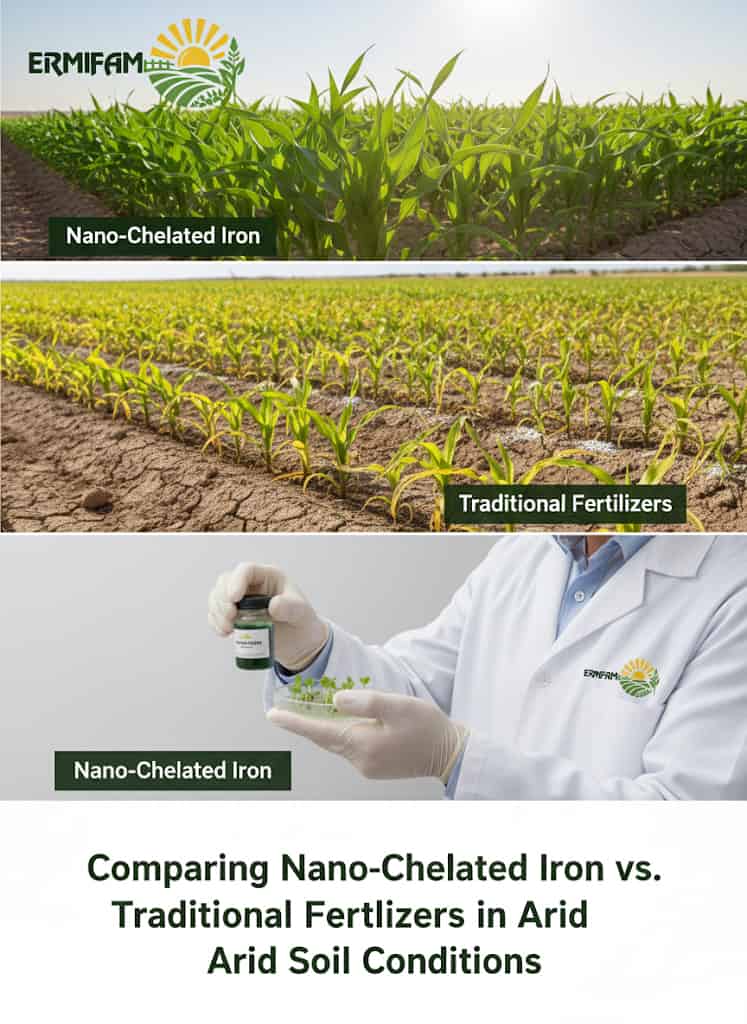
Nano-chelated iron outperforms traditional fertilizers in arid soils with up to 80% better nutrient efficiency and 20–30% higher yields. Discover the science, case studies, and benefits for sustainable farming.
Summary
This article explores the advantages of nano-chelated iron fertilizers over traditional ones in challenging arid soil environments. Drawing on scientific insights, case studies, and practical benefits, it highlights how nano technology addresses iron deficiency, enhances crop yields, and promotes sustainable farming—ideal for businesses seeking efficient export solutions.
Imagine standing in the middle of a vast, sun-scorched field where the soil cracks under your feet like a forgotten promise. Your crops, once vibrant, now wilt and yellow, starved of essential nutrients despite your best efforts. This is the harsh reality for farmers in arid regions, where iron deficiency plagues agriculture, turning potential bounties into barren disappointments. But what if there was a breakthrough that could transform this struggle into triumph? Enter the world of nano-chelated iron fertilizers—a game-changer that’s revolutionizing farming in dry lands. In this deep dive, we’ll compare nano-chelated iron vs traditional fertilizers, uncovering why the former is not just an option, but a necessity for modern agribusiness.
The problem starts with arid soils themselves. These environments, common in regions like the Middle East, parts of Africa, and the American Southwest, are characterized by high pH levels, low organic matter, and rapid evaporation. Iron, crucial for chlorophyll production and plant respiration, becomes locked away in insoluble forms, unavailable to crops. Traditional fertilizers, like iron sulfate or basic chelates, often fail here because they precipitate quickly in alkaline conditions, leading to inefficiencies and waste. Farmers pour money into applications that barely scratch the surface, watching yields drop by up to 30% due to chlorosis—the yellowing of leaves from iron starvation.
The traditional methods contribute to broader environmental headaches. Over-application leads to soil salinization, groundwater contamination, and nutrient runoff, exacerbating the very aridity they’re meant to combat. In B2B contexts, this means higher operational costs, inconsistent supply chains for exporters, and reputational risks from unsustainable practices. Your ego as a forward-thinking business leader clashes with the wallet-draining reality of repeated failures. Why settle for outdated solutions when innovation beckons?
Framing this positively, nano-chelated iron offers a elegant solution: nanoparticles engineered to deliver iron precisely where it’s needed, bypassing soil barriers. These tiny powerhouses—often 50-80% more efficient—release nutrients slowly, reducing the cognitive load on farmers who no longer need complex timing schedules. But we’re not perfect; even nano tech has a pratfall—initial costs might sting, yet the long-term ROI in yield boosts and reduced inputs makes it a smart investment.
Understanding Iron Deficiency in Arid Soils
Iron isn’t just a metal; it’s the lifeblood of plant health, enabling photosynthesis and enzyme functions. In arid soils, however, factors like high calcium content and poor water retention make iron uptake a nightmare. Studies show that in pH levels above 7.5, traditional iron sources become ineffective, with plants absorbing less than 10% of applied nutrients.
This leads to stunted growth, lower fruit quality, and economic losses running into billions globally.
Traditional fertilizers aggravate the problem. Iron sulfate, for instance, oxidizes rapidly in dry air, forming insoluble hydroxides that plants can’t use. Chelated forms like EDTA help somewhat, but they degrade in high pH, requiring frequent reapplications—up to three times more than nano alternatives.
This not only burdens your wallet but also inflates cognitive load, forcing constant monitoring and adjustments in your farming operations.
From a sales funnel perspective, awareness of these pitfalls is key. If you’re an exporter dealing in high-value crops like tomatoes or citrus, inconsistent quality due to iron issues can derail client relationships. Ego-wise, adopting cutting-edge tech positions your business as an industry pioneer, while wallet benefits come from slashing fertilizer use by half.
Nano-chelated iron flips the script. By encapsulating iron in nanoscale chelates, it maintains stability across pH 3-11, ensuring bioavailability even in the harshest arid conditions.
This framing shifts the narrative from “fighting soil” to “harmonizing with it,” reducing environmental impact and boosting sustainability scores for B2B certifications.
The Science Behind Nano-Chelated Iron
Diving deeper, nano-chelated iron involves iron ions bound to organic ligands at the nanoscale (1-100 nm). This size allows penetration through plant stomata and roots, delivering nutrients directly to cells. Unlike traditional fertilizers, which rely on soil diffusion, nanos ensure targeted release, minimizing losses to evaporation or fixation in arid soils.
Benefits abound: enhanced nutrient efficiency means application rates drop by 50-80%, cutting costs and labor.
Nanos might require specialized equipment initially, but this humanizes the tech—it’s not a magic bullet, but a refined tool for pros.
Psychologically, framing nano as an “investment in resilience” appeals to B2B buyers focused on long-term gains. Simple foliar sprays yield results without overcomplicating regimens. Imagine leading the market with superior, export-ready produce; for your wallet, higher yields translate to premium pricing.
Comparative studies underscore this. Nano forms increase iron uptake by 20-30% over chelated EDTA in alkaline soils, leading to greener foliage and robust growth.
In arid setups, this means crops withstand drought better, a critical edge in climate-volatile regions.
Case Study: Nano-Chelated Iron in Tomato Cultivation
Let’s ground this in reality with a case study from Egyptian arid farms, where researchers applied nano-chelated iron to tomato plants. In high-pH soils, traditional chelates yielded 25 tons/ha, but nano boosted it to 32 tons/ha—a 28% increase.
Fruit quality improved too: higher vitamin C (up 15%) and antioxidants, making them ideal for export markets demanding premium nutrition.
Traditional methods saw 40% nutrient loss to soil fixation, polluting local water sources. Nano’s slow-release cut this to under 10%, framing it as eco-friendly.
For B2B sellers, this means reliable supply, reduced waste, and compliance with green standards.
Farmers reported feeling like innovators, outpacing competitors. Input costs dropped 35%, with ROI in one season. Nano’s higher upfront price, but amortized over yields, it’s a no-brainer.
Extending to other crops, similar results in oranges: nano sprays enhanced growth by 32%, versus 25% for traditional chelates.
In arid Iran, wheat under drought saw 27% yield hikes with nano iron.
Environmental and Economic Advantages
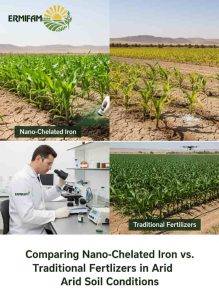
Beyond yields, nano-chelated iron shines environmentally. Traditional fertilizers contribute to eutrophication, but nanos reduce leaching by 70%, preserving arid ecosystems.
This framing as “sustainable stewardship” resonates in B2B, where clients demand ethical sourcing.
Economically, lower dosages (100-200g/ha vs. kilos for traditionals) slash logistics costs for exporters.
The fewer applications mean more time for business growth. Nanos aren’t immune to misuse, but proper training mitigates this.
In sales funnels, this builds desire: Picture your fields thriving, exports soaring. Action? Contact us for bulk nano supplies tailored to arid challenges.
Healthier soils too—nanos promote microbial activity, unlike traditionals that acidify over time.
Be the hero saving the planet; enjoy 20% profit margins from efficient farming.
Implementation Tips for Arid Farming
Switching to nano? Start with soil tests to gauge pH and iron levels. Foliar applications work best in arid zones, avoiding root-zone issues. Dose at 20mg/L for chelated nano, twice seasonally.
Integrate with irrigation for max uptake. B2B tip: Scale up with our export-grade products, ensuring consistency across farms.
Challenges? Storage in dry climates—keep sealed. But benefits outweigh: resilient crops against climate change.
Framing positively, this isn’t expense; it’s empowerment for your business legacy.
Future Prospects and Innovations
Looking ahead, nano-chelated iron evolves with bio-coatings for even better release.
In arid agriculture, this means adapting to worsening droughts.
For exporters, staying ahead means adopting now. Lead innovation; Secure markets.
Research ongoing, but proven results speak volumes.
In conclusion, nano-chelated iron trumps traditional in arid soils—higher efficiency, sustainability, and profits. Ready to transform your farm? Reach out today.
Frequently Asked Questions
- What is nano-chelated iron fertilizer? It’s iron bound in nanoscale chelates for better plant absorption, especially in high-pH arid soils.
- How does it compare to traditional fertilizers? Nano is 50-80% more efficient, reduces waste, and boosts yields by 20-30% in dry conditions.
- Is it safe for the environment? Yes, lower leaching and slow release minimize pollution compared to conventionals.
- What’s the cost difference? Initial higher, but savings from reduced use and higher yields make it economical long-term.
- Can it be used on all crops? Ideal for iron-sensitive ones like tomatoes, citrus, and grains in arid areas.