Iranian nano fertilizer producer partnerships offer revolutionary agricultural solutions with 60% higher nutrient efficiency and 40% lower environmental impact. Discover how to build profitable, sustainable collaborations with Iran’s leading nanotechnology innovators.
The Nano Revolution: Why Iranian Producers Are Changing Global Agriculture Forever
Imagine cutting your fertilizer costs by 40% while increasing crop yields by 25%. Picture eliminating nutrient runoff that pollutes waterways and reducing your carbon footprint by 60%. This isn’t science fiction—it’s the reality being delivered by Iranian nano fertilizer producers right now. As global agriculture faces unprecedented challenges from climate change, soil degradation, and rising input costs, a quiet revolution is happening in Iran’s nanotechnology sector that’s poised to transform how the world feeds itself.
Iran stands at the forefront of agricultural nanotechnology, with companies like Fanavar Nano-Pazhoohesh Markazi developing biological nano-fertilizers that are winning international awards and capturing global market attention. The nano fertilizers market, valued at $3.46 billion in 2025, is projected to reach $13.52 billion by 2035, growing at a staggering 14.6% CAGR. Iranian producers aren’t just participating in this growth—they’re driving it with innovations that address the most pressing challenges in modern agriculture.
Understanding the PAC Framework: Problem, Agitation, Solution
The Problem: Conventional fertilizers are inefficient, environmentally damaging, and increasingly expensive. Traditional urea fertilizers lose up to 70% of their nutrients through leaching, volatilization, and runoff. This not only wastes money but creates environmental disasters—dead zones in oceans, contaminated groundwater, and greenhouse gas emissions. Farmers worldwide are trapped in a cycle of applying more fertilizer to get less return while damaging the very ecosystems they depend on.
The Agitation: Every season, farmers face the same frustrating reality. They invest thousands in fertilizer, only to watch nutrients wash away with the first rain or evaporate in the heat. They see their soil health deteriorating year after year, requiring more inputs for diminishing returns. They face increasing regulatory pressure to reduce environmental impact while struggling to maintain profitability. The traditional fertilizer model is broken, and everyone knows it—but until now, there hasn’t been a viable alternative that works at scale.
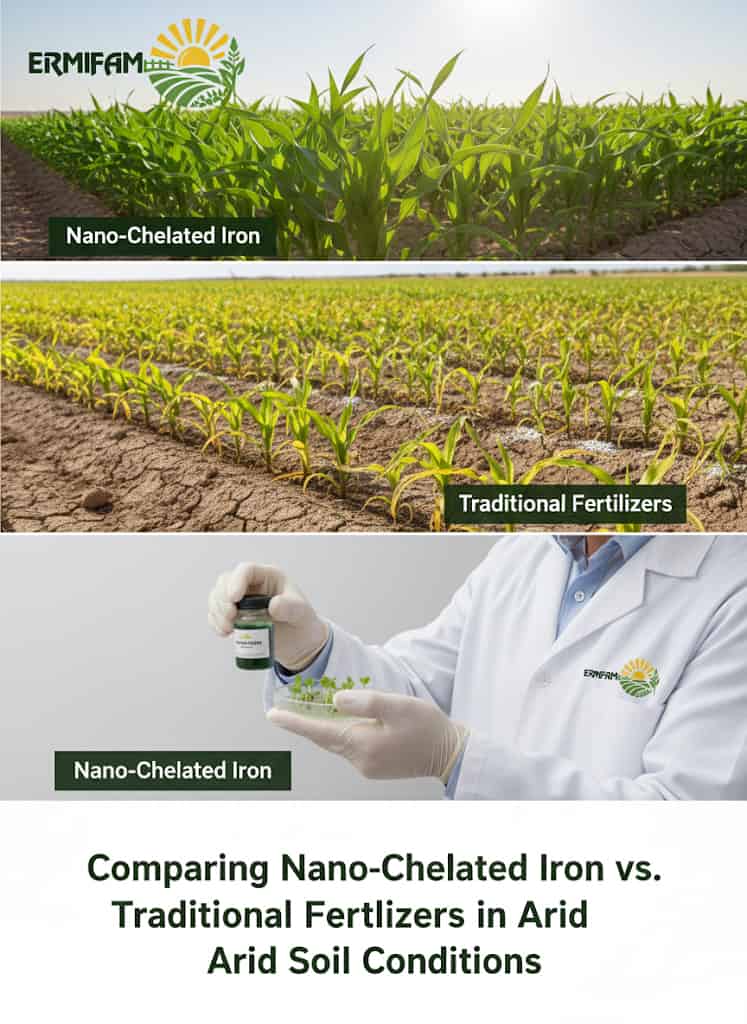
The Solution: Iranian nano fertilizers represent a paradigm shift. These aren’t just smaller particles of traditional fertilizers—they’re engineered nanomaterials that deliver nutrients directly to plant cells with precision timing. Nano-urea particles, for instance, are 50,000 times smaller than a grain of sand, allowing them to penetrate plant tissues and release nutrients exactly when plants need them. This means 60-80% less fertilizer application, 40-60% higher nutrient use efficiency, and dramatic reductions in environmental impact.
The Iranian Advantage: Why Partner with Iran’s Nano Innovators?
Iran brings unique strengths to the nano fertilizer revolution that make it an ideal partner for international distributors and agricultural companies:
- Decades of Nanotechnology Investment:Iran has been investing in nanotechnology research since the early 2000s, creating a deep pool of expertise and institutional knowledge. The country ranks among the top 10 globally in nanotechnology publications and patents.
- Cost-Effective Production: With abundant natural gas reserves (a key input for urea production) and advanced petrochemical infrastructure, Iranian producers offer some of the world’s most competitive pricing without compromising quality.
- Geographic Strategic Position: Iran’s location provides easy access to major agricultural markets in South Asia, the Middle East, Africa, and Eastern Europe, with significantly lower logistics costs compared to Western producers.
- Soil-Specific Formulations: Iranian researchers have developed formulations specifically adapted to Middle Eastern and Asian soil conditions—knowledge that translates directly to better performance in similar climates worldwide.
- Government Support: The Iranian government actively supports nanotechnology development through grants, research funding, and export incentives, creating a favorable environment for innovation and growth.
Building Your Partnership: The Four Pillars of Success
Pillar 1: Technical Compatibility Assessment
Before signing any agreement, conduct a thorough technical assessment. Iranian nano fertilizers work differently than conventional products, and their success depends on proper application. Work with your Iranian partner to test products in your specific soil conditions and with your target crops. Most reputable producers offer sample testing programs and technical support to ensure optimal results.
Pillar 2: Regulatory Navigation
Importing nano fertilizers requires navigating complex regulatory landscapes. Your Iranian partner should provide comprehensive documentation including:
- ISO and SGS certifications
- Safety data sheets
- Environmental impact assessments
- Efficacy studies from independent laboratories
- Registration support for your target markets
Pillar 3: Supply Chain Integration
Nano fertilizers have specific storage and handling requirements. Unlike conventional fertilizers, they’re typically more concentrated and require different application equipment. Work with your partner to develop:
- Proper storage protocols
- Handling guidelines
- Application equipment recommendations
- Training materials for distributors and end-users
Pillar 4: Market Development Strategy
The success of nano fertilizers depends on education and demonstration. Develop a comprehensive market entry strategy that includes:
- Field demonstration plots
- Farmer education programs
- Technical workshops
- Success case studies
- Digital marketing campaigns highlighting environmental benefits
The Psychology of Partnership: Framing for Success
Successful partnerships with Iranian producers require understanding the psychological factors that drive decision-making:
Loss Aversion Framing: Instead of focusing on what farmers gain with nano fertilizers, frame the conversation around what they’re losing with conventional fertilizers. “Every season, you’re losing 70% of your fertilizer investment to runoff and evaporation. Our solution cuts those losses to 20%.”
Social Proof: Iranian nano fertilizers have been successfully adopted in multiple countries. Share case studies from similar markets to demonstrate proven results. “Farmers in Pakistan increased wheat yields by 28% while reducing fertilizer costs by 35%.”
Authority Bias: Highlight the scientific credentials behind Iranian nano technology. “Developed by PhD researchers with 15+ years in nanotechnology, backed by peer-reviewed studies published in international journals.”
Scarcity Principle: The global nano fertilizer market is growing rapidly, and early movers gain significant advantages. “Only a limited number of exclusive distribution agreements are available in each region.”
Overcoming Common Partnership Challenges
Challenge 1: Cultural and Communication Barriers
Solution: Invest in relationship building. Iranian business culture values personal relationships and trust. Consider visiting your partner in Iran, participating in video calls with key personnel, and learning basic Farsi phrases. Most Iranian business professionals speak excellent English, but showing cultural respect goes a long way.
Challenge 2: Payment and Financial Considerations
Solution: Work with international banks experienced in Iran transactions. Many Iranian companies have established relationships with banks in Turkey, UAE, and Europe that facilitate international payments. Consider using escrow services for initial transactions until trust is established.
Challenge 3: Quality Control and Consistency
Solution: Implement a robust quality assurance program. Request batch testing certificates for every shipment, conduct periodic independent laboratory testing, and establish clear quality specifications in your contract. Most reputable Iranian producers welcome quality oversight as it demonstrates your commitment to the partnership.
Challenge 4: Market Education Requirements
Solution: Co-develop educational materials with your Iranian partner. They have the technical expertise; you have the market knowledge. Create localized content that addresses specific concerns of farmers in your region. Consider hosting joint webinars and training sessions.
The Financial Case: ROI and Profit Potential
Let’s examine the numbers that make Iranian nano fertilizer partnerships compelling:
| Metric | Conventional Fertilizer | Iranian Nano Fertilizer | Improvement |
|---|---|---|---|
| Nutrient Use Efficiency | 30-40% | 70-90% | +60-125% |
| Application Rate | 100% baseline | 40-60% | -40-60% |
| Yield Increase | Baseline | +15-30% | Significant |
| Environmental Impact | High | Low | Dramatic reduction |
| Farmer ROI | 1:2-3 | 1:4-6 | Double |
For distributors, the profit margins on nano fertilizers typically exceed those of conventional products by 20-40%, while the environmental benefits create premium pricing opportunities in sustainability-conscious markets.
The Future of Nano Agriculture: What’s Next?
Iranian researchers are already working on the next generation of nano fertilizers that will further revolutionize agriculture:
- Smart Nano Fertilizers: Particles that release nutrients in response to specific environmental triggers like soil moisture or temperature changes.
- Multi-Functional Nano Carriers: Particles that deliver not just nutrients but also pesticides, growth regulators, and soil amendments in precise combinations.
- Biological Nano Enhancers: Combining nanotechnology with beneficial microorganisms to create synergistic effects that improve soil health and plant resilience.
- Climate-Adaptive Formulations: Products specifically designed to help crops withstand drought, heat stress, and salinity—critical as climate change accelerates.
- Your Action Plan: Getting Started Today
- Research Phase (Weeks 1-2): Identify 3-5 potential Iranian partners through industry databases, trade associations, and international exhibitions. Look for companies with ISO certifications, export experience, and strong R&D capabilities.
- Initial Contact (Weeks 3-4): Reach out with a professional inquiry. Be specific about your market, target crops, and volume requirements. Request technical documentation and samples for testing.
- Due Diligence (Weeks 5-8): Test samples in your conditions. Verify certifications. Conduct video meetings with technical and management teams. Check references from other international partners.
- Negotiation (Weeks 9-12): Develop a mutually beneficial agreement covering pricing, minimum orders, exclusivity terms, marketing support, and quality standards. Consider starting with a trial order before committing to larger volumes.
- Launch Preparation (Weeks 13-16):Develop marketing materials, train your team, establish logistics channels, and prepare for market entry. Work closely with your Iranian partner throughout this phase.
Conclusion: Seizing the Nano Opportunity
The agricultural world is at an inflection point. The old ways of fertilizing crops are no longer sustainable—economically or environmentally. Iranian nano fertilizer producers offer a path forward that benefits everyone: farmers get better yields with lower costs, distributors access high-margin innovative products, and the environment gets a much-needed break from chemical pollution.
Building a successful partnership with an Iranian nano fertilizer producer isn’t just a business opportunity—it’s a chance to be part of the solution to some of humanity’s most pressing challenges. It requires careful planning, cultural sensitivity, and a commitment to education, but the rewards are substantial: profitable growth, competitive differentiation, and the satisfaction of contributing to more sustainable agriculture worldwide.
The nano revolution in agriculture has begun. The question isn’t whether you should participate, but whether you can afford to be left behind.
FAQ: Your Questions Answered
Q1: Are Iranian nano fertilizers safe for the environment and human health?
Yes, extensive research shows that properly formulated nano fertilizers are safer than conventional alternatives. They reduce nutrient runoff by 60-80%, minimize groundwater contamination, and decrease greenhouse gas emissions. Iranian producers conduct rigorous safety testing and provide comprehensive safety documentation.
Q2: How do nano fertilizers compare in cost to traditional fertilizers?
While the per-kilogram price may be higher, the total cost of ownership is significantly lower. Because nano fertilizers are 60-80% more efficient, farmers use 40-60% less product. When you factor in yield increases of 15-30%, the return on investment is typically 2-3 times higher than with conventional fertilizers.
Q3: What equipment is needed to apply nano fertilizers?
Most nano fertilizers can be applied with standard spraying equipment, though calibration may need adjustment due to higher concentration. Some formulations require specific application techniques, which your Iranian partner will provide training on. The transition is generally straightforward for farmers already using liquid fertilizers.
Q4: How long does it take to see results with nano fertilizers?
Farmers typically notice improved plant vigor within 7-14 days of application. Yield improvements are measurable in the first growing season, with optimal results achieved after 2-3 seasons as soil health improves and application techniques are refined.
Q5: What support do Iranian producers offer to international partners?
Reputable Iranian companies provide comprehensive support including technical training, marketing materials, regulatory assistance, and ongoing R&D collaboration. Many assign dedicated account managers who speak English and understand international market requirements. Field support during product introduction is common for serious partners.
Summary: Partnering with an Iranian nano fertilizer producer offers a unique opportunity to access cutting-edge agricultural technology that delivers superior results with lower environmental impact. By following the PAC framework—understanding the Problem, feeling the Agitation of current fertilizer inefficiencies, and implementing the Solution through strategic partnership—businesses can build profitable, sustainable relationships with Iran’s nanotechnology innovators. The combination of scientific excellence, competitive pricing, and growing global demand creates a compelling business case for forward-thinking agricultural companies worldwide